Mapping CDK-cyclin interactions
The surfaces where proteins touch each other are hard to find, but they make the best targets. We have designed small halogen-tagged chemical fragments, called FragLites, that light up these protein-protein interaction sites by X-ray crystallography — giving us a map of where to probe cyclin function and where to aim new chemical tools.
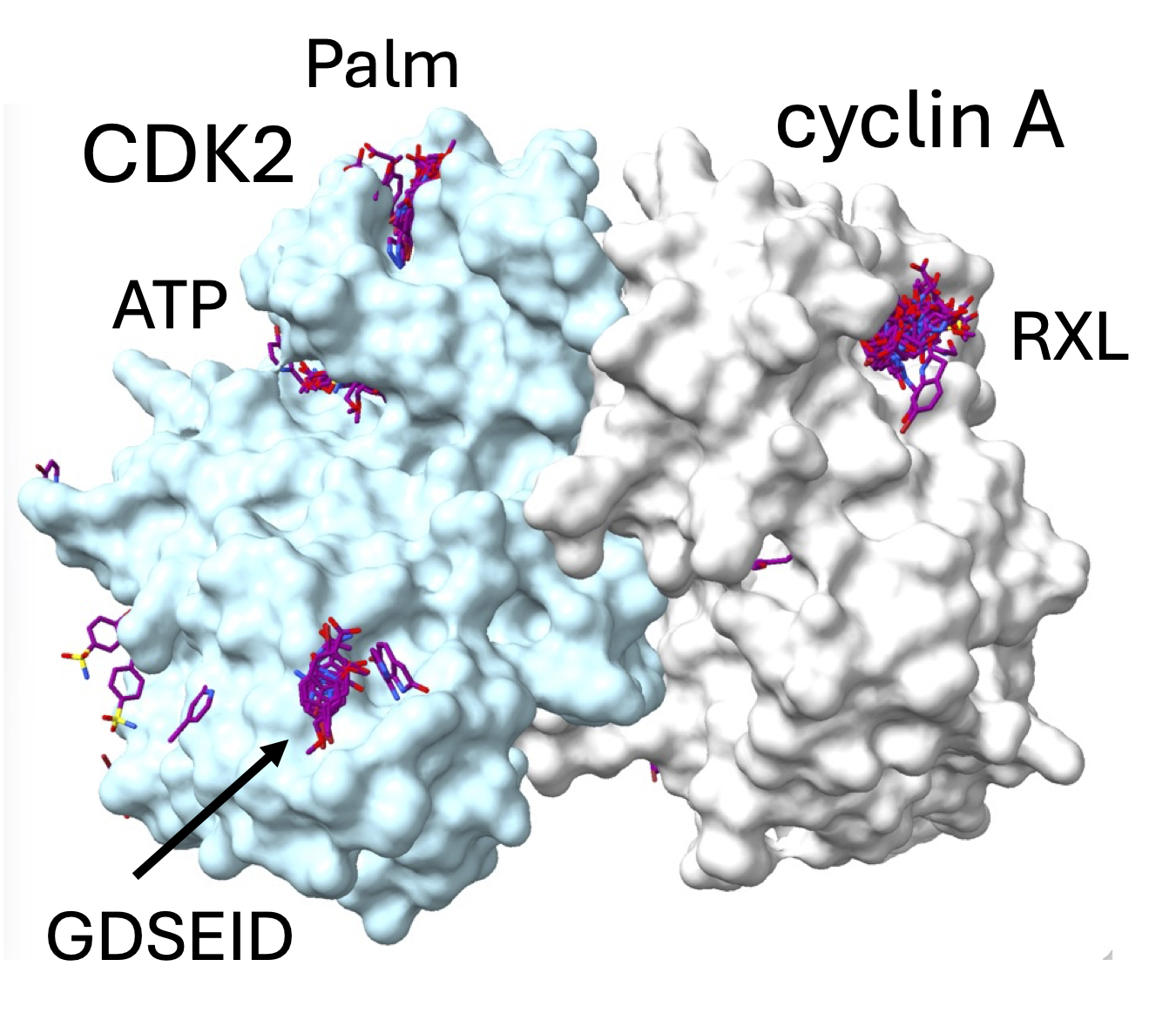
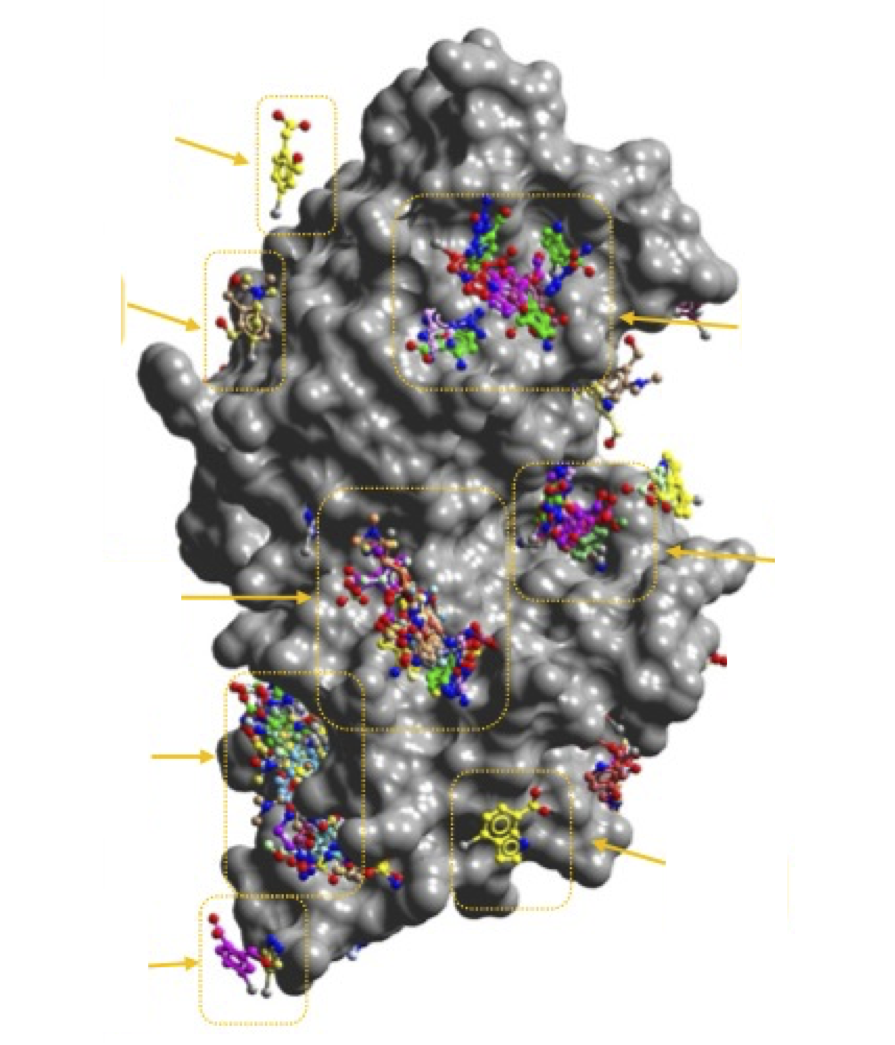
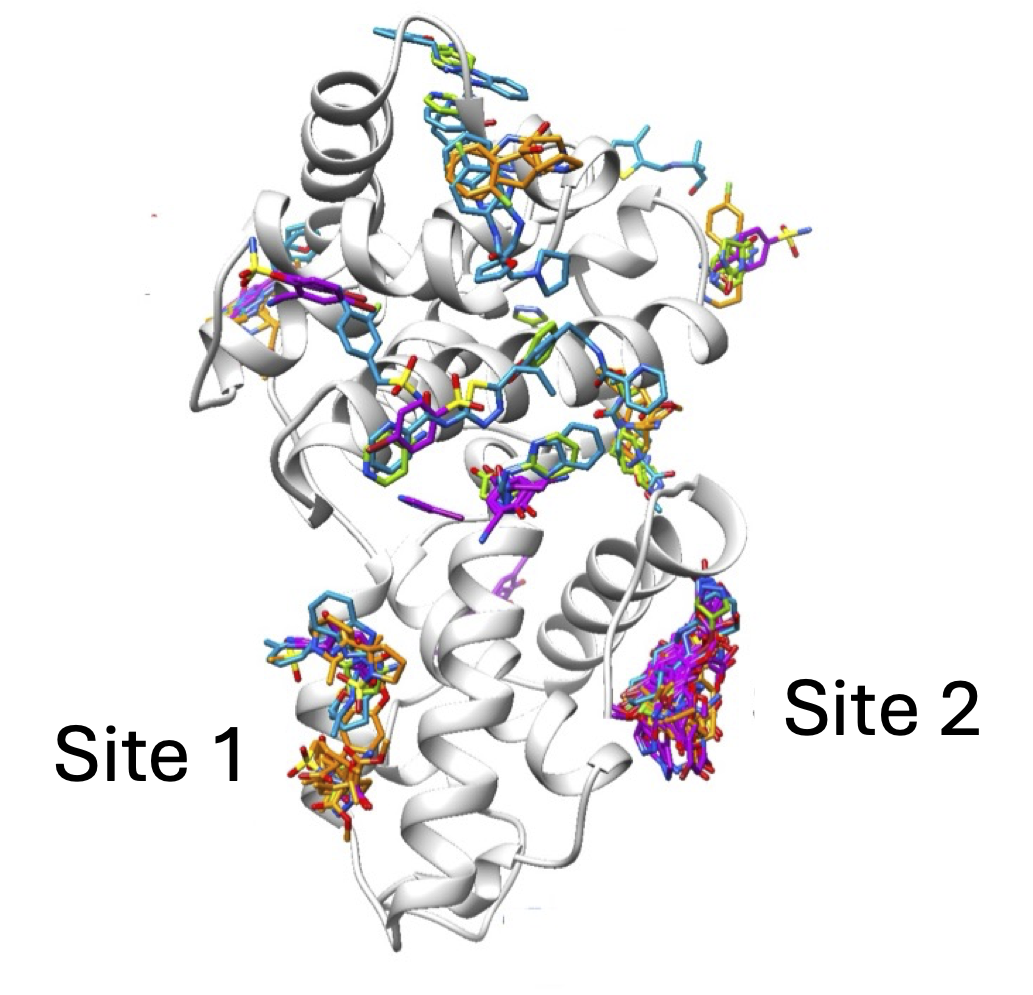
In contrast to protein active sites, which are refined by evolution to bind to other macromolecules, cofactors, or substrates and can generally be recognized from their shape and physicochemical properties, allosteric sites or sites of regulatory protein−protein interaction (PPI) are harder to identify. PPIs commonly include hotspot regions, small finite areas of the interactome with a concentrated number of key residues that contact the partner protein and make a significant contribution to binding free energy. PPIs can be formed by structured interfaces and through short linear motifs (SLiMs) binding to docking sites. Around
2–12 amino acids in length, SLiMs have a defined sequence within intrinsically disordered regions of the proteome. In the case of CDK-cyclin complexes, multiple SLiMs can each dock to their cognate site with low affinity, allowing site- and temporally specific regulation of CDK-cyclin signaling cascades. Current small molecule libraries are designed to provide starting points for drug discovery and are not optimised to probe protein interaction sites by mimicking the groups that a protein would exploit to bind to a regulatory partner. In collaboration with Prof. Mike Waring and chemistry colleagues, we have designed a set of halogenated compounds expressing paired hydrogen-bonding motifs, termed FragLites. The FragLites identify protein interaction surfaces sensitively and unambiguously by X-ray crystallography, exploiting the anomalous scattering of the halogen substituent. We are now applying this approach to the cyclin family to identify novel sites of protein interaction and guide the generation of separation of function mutants to probe function.