CDK structure and function
The cyclin-dependent kinases (CDKs) look alike but do very different jobs. By solving their structures side by side, we ask what conserved and divergent features let each CDK act at the right moment on the right target — the foundation for understanding how they work and how they are regulated.
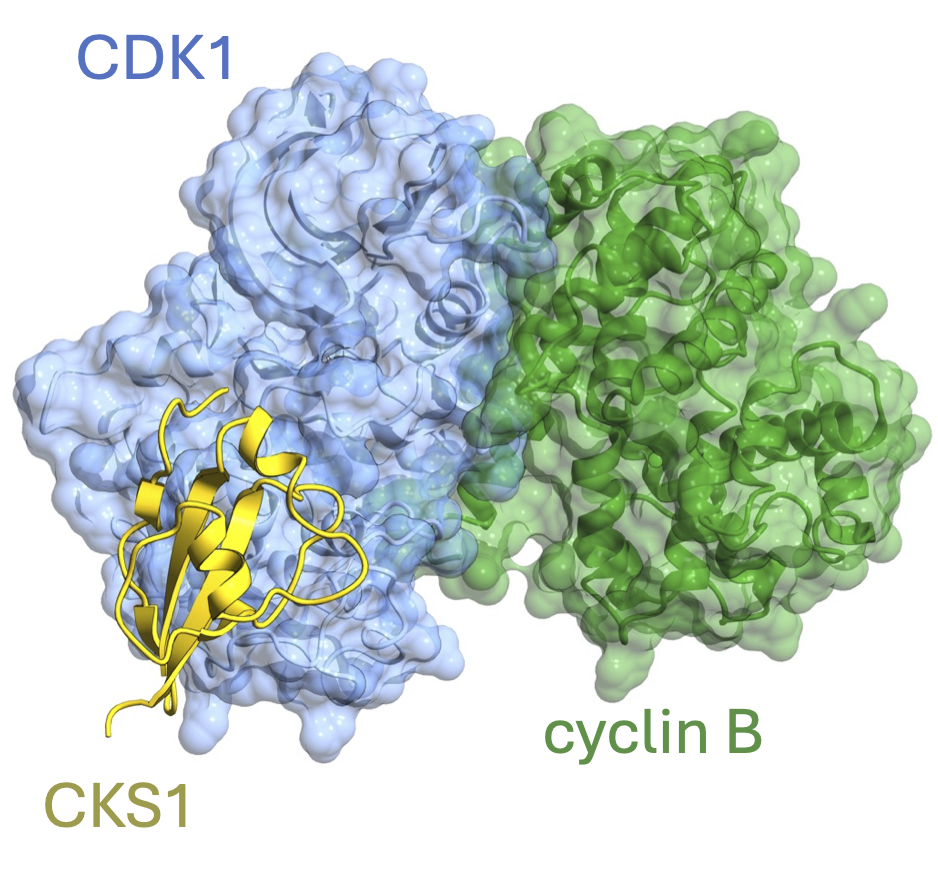
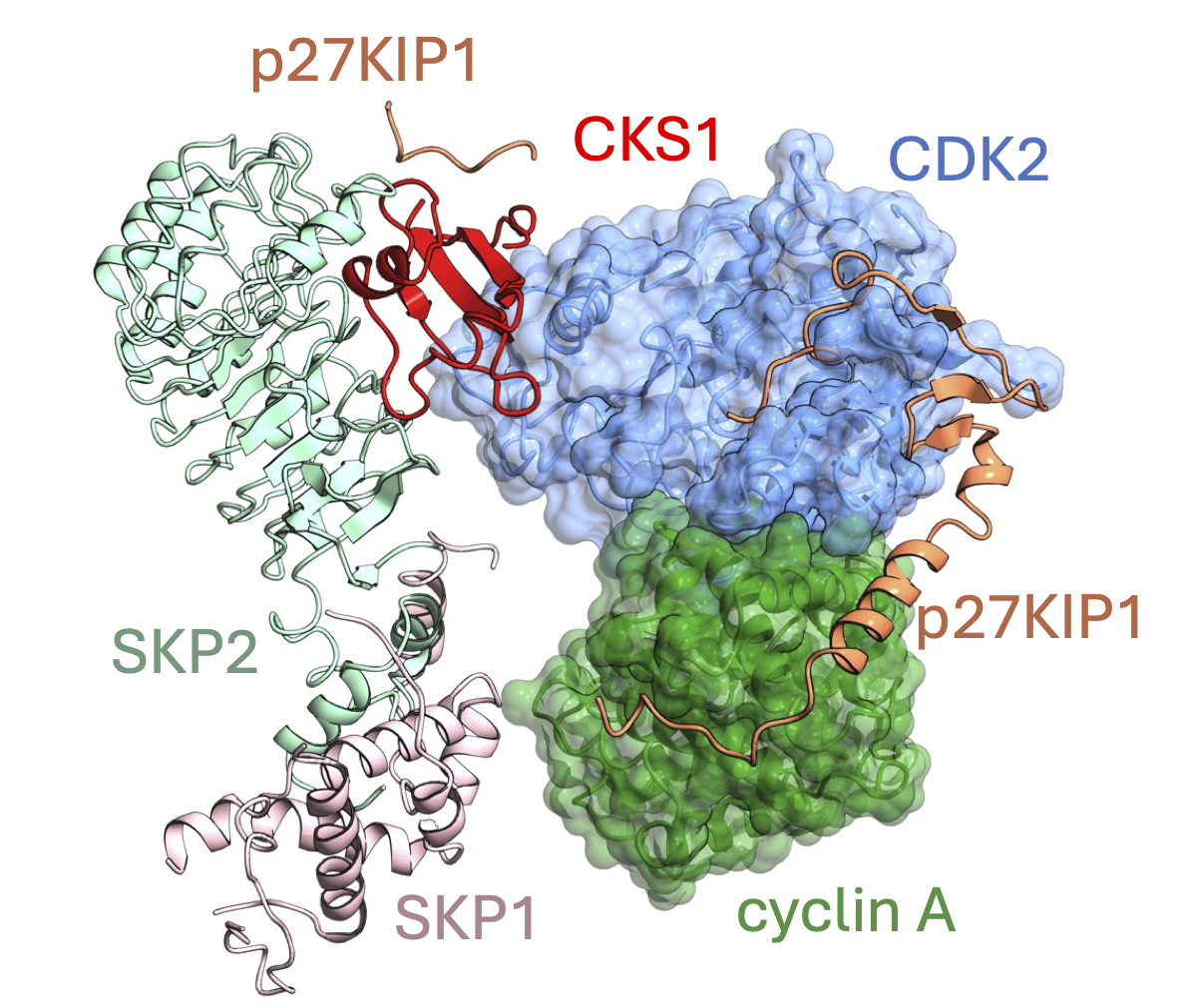
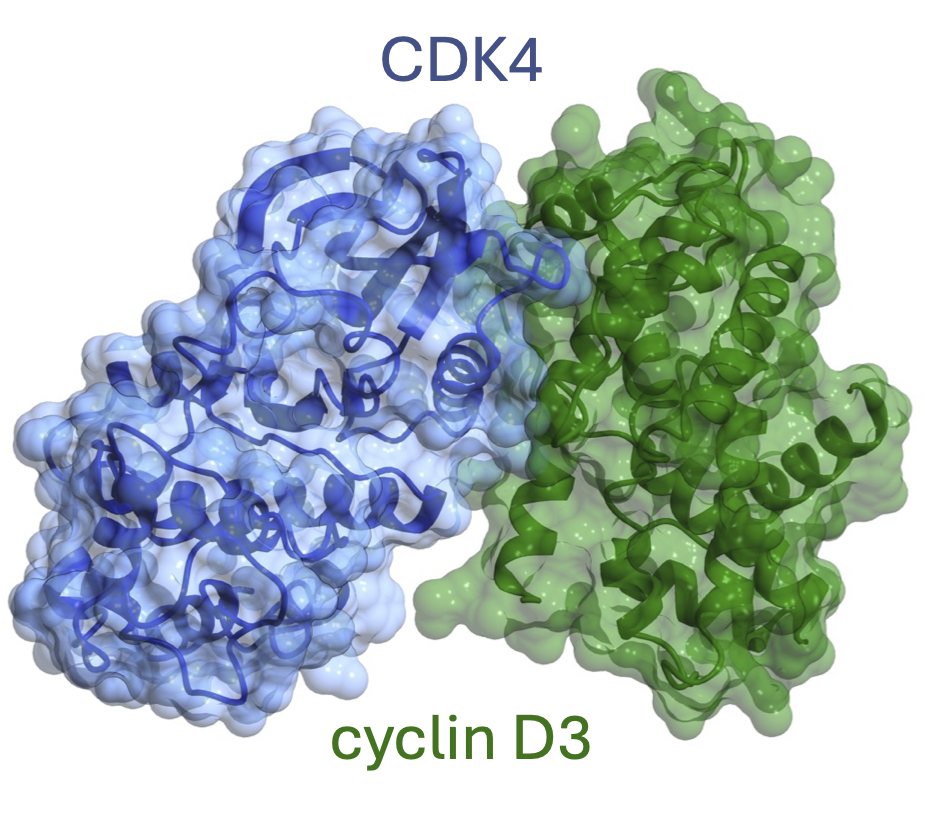
In the mitotic cell cycle, sequential waves of CDK-cyclin activity (CDK4 and CDK6, CDK2 and CDK1) promote and co-ordinate alternating rounds of DNA replication and chromosome segregation and respond to checkpoint pathways to ensure the genomic integrity of each daughter cell. Coordinated phosphorylation of the RNA polymerase II (Pol II) C-terminal domain and associated transcription and elongation factors by members of the CDK family that regulate transcription (CDK7, CDK8, CDK9, CDK12/13) control transcription initiation and elongation. We take a comparative approach to better understand CDK structures: to identify and characterise their conserved and divergent structural features that distinguish them and to provide a starting point from which to understand their mechanisms of action and regulation. A recent review (PMID: 41720678) compares the members of the CDK family to illustrate how their structural diversity impacts function. Click on the images below to find out more.