
News & Events
TraPCAf Research Webinar 2025: Advancing Parkinson’s Research Across Africa
Africa remains one of the most under-studied regions in the world with regards to prevalence, risk factors, lived experience, and access to care in Parkinson’s Disease (PD). Evidence indicates low awareness across the continent, challenges associated with stigma, inconsistent service provision, and limited access to affordable medication. As a result, many people are undiagnosed or unsupported.
Transforming Parkinson’s Care in Africa (TraPCAf), funded by NIHR, is working across seven countries to address this gap. The project brings together an interdisciplinary team working on the first study of its kind in Africa.
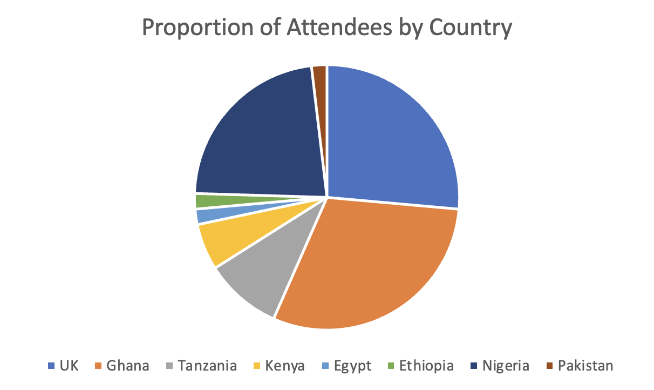
On Saturday 22 November, TraPCAf hosted a research seminar to share early insights, strengthen collaborations, and bring together 81 participants across four African time zones and the UK.
Rich Morton and Momodou Cham opened the session with findings from past surveys and evidence reviews. These provide an important baseline understanding of clinical practice, awareness, and patient pathways across the continent — revealing current gaps and opportunities for improvement. Lara Ojo, Momodou Cham, Rich Morton, and Sarah Urasa presented prevalence data emerging from multiple sites. Their work focuses on gaining a deeper understanding of how Parkinson’s Disease patterns across geographies, healthcare systems, and genetic backgrounds.
Momodou Cham provided an update on the Mucuna pruriens trial, which explores the feasibility of a locally accessible, plant-based therapy. This intervention, used traditionally in some African communities, has been designed with cultural relevance and affordability in mind.
Omotola Thomas and Tash Fothergill-Misbah spoke of the role of lived experience and community involvement across the project. Community Engagement and Involvement (CEI) is embedded at every stage of the project, ensuring that people living with Parkinson’s help shape priorities, language, methods, and interpretations.
The session moved to genetics with Nijde Okubadejo, who outlined TraPCAf’s contribution to international efforts through the Global Parkinson’s Genetics Program (GP2). African genetic data remains underrepresented worldwide and so, integrating the data from African cohorts is vital in building a global understanding of Parkinson’s Disease.
The session closed with a forward look at the next phase of TraPCAf —centred on data integration, expanded genetic work, and continued partnership with communities and clinical teams across all seven countries.
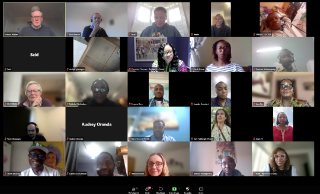
TraPCAf extends heartfelt thanks to all speakers and participants for their engagement, questions, and collaboration.
Last modified: Thu, 27 Nov 2025 12:58:24 GMT