
News & Events
Mary Agoriwo Reflects on First African Parkinson’s MDS Conference
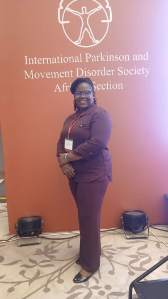
I have been a member of the International Parkinson and Movement Disorder Society African Section (MDS-AS) for the past 12 years, and this journey has been marked by continuous growth, guided by the right support and mentorship toward fulfilling my dream of becoming a physiotherapist specialising in movement disorders.
My first MDS conference experience was in 2019 at the 6th Asian and Oceanian Parkinson’s Disease and Movement Disorders Congress (AOPMC) in Hangzhou, China (12–14 April 2019). While I enjoyed all the sessions, I noticed that they focused on issues pertaining to their section and did not directly address African-specific challenges. At that moment, I felt strongly that Africa needed a similar forum where critical issues related to movement disorders could be discussed and home-grown solutions recommended.
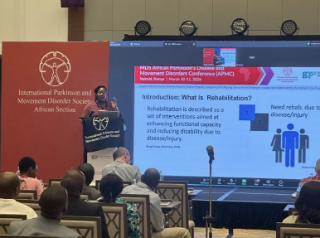
As co-chair of the MDS-AS Education Committee, I was delighted to hear about the proposal for the first MDS African Parkinson’s Disease and Movement Disorders Conference (APMC), knowing that what I had envisioned about six years earlier was about to become a reality. I was honoured to be invited as a member of the conference’s scientific committee, where rehabilitation was identified as a key area for discussion, given the importance of a multidisciplinary approach to managing movement disorders. The conference brought together clinicians, neuroscientists, researchers, nurses, and allied health professionals, creating a rich platform for collaboration.
During the event, I learned more about the history of MDS-AS, particularly the pioneers who worked tirelessly to grow the organization from an MDS Task Force on Africa into MDS African Section. This inspires me to contribute meaningfully to the African Section, especially in advancing rehabilitation within movement disorders care. Listening to distinguished faculty from across Africa present on topics such as clinical approaches, genetic testing, imaging and therapies, genetics in Parkinson’s disease, and acquired movement disorders gave me renewed hope for the future of movement disorders care in Africa.
On multidisciplinary care, I presented the gaps and opportunities surrounding rehabilitation in Africa, sharing my lived experience as a practicing physiotherapist and rehabilitation researcher. I highlighted challenges such as delayed referrals, limited access to rehabilitation professionals with expertise in movement disorders, high costs of care and transportation, and restricted mentorship and research opportunities.
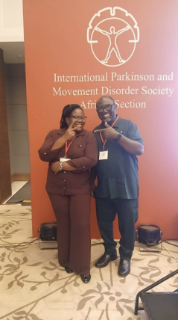
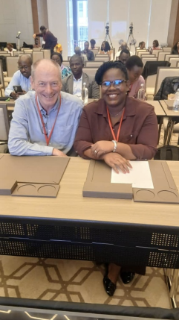
As the only allied health professional on both the scientific committee and faculty list, I deeply appreciated the emphasis on multidisciplinary collaboration. However, I look forward to seeing greater inclusion of allied health professionals in future conferences, with sessions and workshops dedicated to their perspectives. For allied health and nursing participants, my role as co-chair of the MDS-AS Education Committee, scientific committee member, and faculty hopefully signals a pathway for growth and recognition within MDS-AS.
Finally, I am grateful to the MDS-AS leadership for this opportunity and to individuals such as Professor Albert Akpalu and Professor Richard Walker, who recognized my potential and supported my clinical and research journey in movement disorders. Attending this conference also offered me the opportunity to meet numerous colleagues in-person for the first time after several virtual engagements. I eagerly anticipate many more APMCs ahead.
About the Author
Mary Wetani Agoriwo. PT, MSc. (Neurorehabilitation), PhD (Physiotherapy) is a lecturer at University of Health and Allied Sciences, Ghana. She is Co-ordinator of PD Support Group, Ghana.
(2016/2017 Chevening Scholar, 2021 OWSD Fellow, 2022 Mawazo Fellow, TraPCAf Early Career Researcher, maryagoriwo@gmail.com, +233 246190619)
Last modified: Sat, 21 Mar 2026 13:20:56 GMT