
News & Events
Insights from the 7th World Parkinson's Congress with Dr Marieke Dekker
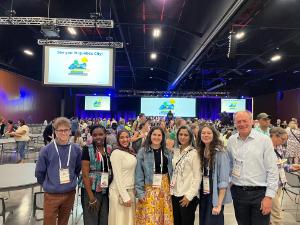
Last month, the global Parkinson's community gathered in Phoenix, Arizona, for the 7th World Parkinson's Congress (WPC 2026). Held from May 24th to May 27th, the Congress welcomed a diverse range of stakeholders: researchers, neurologists, rehabilitation specialists, care partners, and, most importantly, people living with Parkinson's disease.
We spoke to Dr Marieke Dekker, Co-Investigator for our Tanzania site, about her experience.
An Opportunity for Collaboration and Community
Dr Dekker described the overall experience, rather than any single event, as the ultimate highlight of the Congress:
"The World Parkinson's Congress was a unique experience merging the researchers' and doctors' universe with that of the people with Parkinson's disease, whom we do this all for. It is a very important synergy to learn, present, and network in collaboration with, and surrounded by, people who have the lived experience."
For a project like TraPCAf, which places a heavy emphasis on community engagement, the opportunity to connect directly with people living with Parkinson's serves as a reminder of exactly whom this research serves.
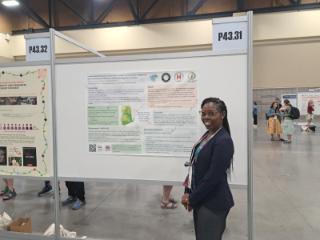
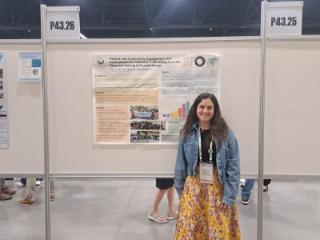
Additionally, the host city of Phoenix played an important role in making this Congress so distinct. As Dr Dekker explains, the Barrow Neurological Institute (BNI) is not only a supporting institution of the WPC, but also a long-term collaborator with TraPCAf. Since 2017, the BNI has collaborated with neurologists at TraPCAf's rural research site in Kilimanjaro, Tanzania, with the research groups' efforts overlapping at various points over the years.
WPC 2026 also provided these partners with a rare opportunity to connect in person. Dr Dekker noted that the Congress "was a good occasion for the BNI–KCMC–TraPCAf collaborators to meet up" face-to-face to share expertise and discuss future research plans.
'Uhuru' on the Big Screen
Beyond the science, the World Parkinson's Congress features extensive networking, wellness, and creativity programmes. This creative stream allows individuals to express stories and explore issues relating to Parkinson's disease through writing, art, dance, music, and film - which is where Uhuru came in.
Uhuru (which translates to "freedom" in Swahili) follows the lives of three people living with Parkinson's disease in Tanzania as they navigate diagnosis and treatment in a country where specialist care and access to medication are not guaranteed. The film, produced by Dr Tash Fothergill-Misbah and directed by Olz McCoy, successfully made it into the Top 10 of the WPC Short Film Competition.
If you missed the screening in Phoenix, you can catch a special viewing and a conversation with the filmmakers at our upcoming event, Community Stories of Global Health and Ageing.
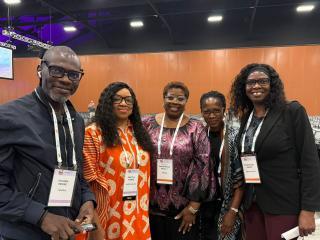
With thanks to Dr Marieke Dekker (Co-Investigator, Tanzania) for sharing her reflections.
Last modified: Thu, 18 Jun 2026 15:35:39 BST