
News & Events
Brenda Mghendi Reflects on World Health Summit Regional Meeting 2026
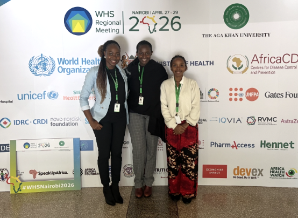
This week, 27th to 29th April, the World Health Summit Regional Meeting 2026 held in Nairobi brought together policymakers, researchers, practitioners, and global health actors to reflect on the future of healthcare systems across the continent.
The conversations were inclusive of research and manufacturing, digital health and health financing, with several key themes consistently emerging. These takeaways and reflections offer insights into where Africa’s health systems are headed and what will be required to build more resilient and responsive systems.
Strengthening African Research to Build Better Health Systems:
One of the strongest messages throughout the summit was the importance of African-led research. There was a clear recognition that locally generated evidence is essential for developing healthcare systems that respond to the realities of African populations.
For too long, many health policies and interventions have relied heavily on data generated outside the continent. Strengthening research capacity within African institutions will not only improve the relevance of healthcare interventions but also ensure that policy decisions are grounded in local contexts and needs. Multinational research projects like TraPCAf, co-led by African researchers, are an important step toward generating locally grounded evidence for stronger health systems, while addressing the longstanding gap in global research on Parkinson's disease from African contexts.
Moving from Importing to Producing Health Solutions:
Another theme that came up was the urgent need to strengthen pharmaceutical and medical manufacturing across Africa. A session led by Dr. Githinji Gitahi, Global CEO of Amref Health Africa, emphasised that Africa must move from primarily importing health solutions to producing medicines, vaccines, and medical supplies locally. There was a call to strengthen local manufacturing as this has the potential to address persistent gaps in access to essential medicines. For individuals living with neurological conditions such as Parkinson's disease, shortages of key medications remain a major challenge across many African countries. Local production could significantly improve availability and affordability of such treatments.
Developing strong regional manufacturing capacity would also reduce dependency on global supply chains and improve health security across the continent.
Integrating Non-Communicable Diseases into Primary Health Care:
There was also a strong call to integrate non-communicable diseases (NCDs) more effectively into primary health care (PHC) systems. Several discussions focused specifically on brain health, particularly conditions such as Dementia and other neurological disorders. This highlights the importance of ensuring that conditions like Parkinson's disease are part of these conversations. Advocates, researchers, and practitioners working in Parkinson’s care need to be present in policy spaces to raise awareness of the unique challenges surrounding diagnosis, treatment access, and long-term care.
Without deliberate representation, important neurological conditions such as Parkinson's disease risk continued under-recognition within broader NCD strategies, an issue that was clearly evident during the 2026 World Health Summit discussions.
Recognising the Role of Caregivers in Health Systems:
Another important discussion centred on the often overlooked role of caregivers in healthcare systems. Across many African contexts, caregivers provide the majority of long-term support for people living with chronic conditions, including neurological disorders, yet their contributions frequently go unrecognised in health policy and planning. Acknowledging and supporting caregivers is essential not only for their own well-being but also for the sustainability of health systems that rely heavily on informal care networks.
Embracing Digital Health and Data Systems
The summit also highlighted the growing role of digital health solutions in strengthening healthcare delivery. Digitalisation can improve access to services, enhance data management, and enable more coordinated care. However, the discussions emphasised the need to ensure that digital health systems are well integrated and streamlined, allowing data to support better decision-making and service delivery rather than creating fragmented systems.
When implemented effectively, digital health tools can help bridge gaps in access, particularly in underserved areas.
The Need for Sustainable Local Health Financing:
A recurring concern throughout the summit was the dependence on external funding for many health initiatives in Africa. Participants emphasised the need for stronger domestic investment in healthcare. Sustainable health systems require long-term financial commitments from national governments and other stakeholders. While international partnerships remain important, there was a clear call for African governments to demonstrate greater leadership and ownership in financing healthcare priorities. This includes investing not only in infrastructure and services but also in research, workforce development, and innovation.
Rethinking the Nature of Health Funding for Africa
Closely related to this discussion was a broader reflection on the nature of global health funding for the continent. It was noted that much of the current funding landscape is characterised by short-term projects and donor-driven priorities. Summit participants called for funding models that prioritise long-term impact and sustainability, ensuring that health investments strengthen systems rather than creating temporary solutions.
A Call for Further Collaboration:
Finally, one of the most consistent messages across the summit was the need for greater collaboration across sectors and disciplines. It was acknowledged that health challenges are complex and interconnected, and addressing them effectively requires cooperation between researchers, clinicians, policymakers, civil society organisations, and communities. Working in silos limits the potential for meaningful progress. Collaborative approaches, on the other hand, create opportunities to leverage diverse expertise and develop more holistic solutions.
Looking Ahead:
The conversations at the World Health Summit Regional Meeting 2026 reinforced a central message: the future of healthcare in Africa will depend on locally driven solutions, stronger systems, and meaningful collaboration.
From expanding African research and manufacturing capacity to integrating NCDs into primary care and supporting caregivers, the path forward requires coordinated effort across multiple sectors. If these priorities are pursued with sustained commitment, they have the potential to transform healthcare systems across the continent making them more resilient, equitable, and responsive to the needs of African populations.
The TraPCAf Consortium was represented by Brenda Mghendi, Martha Pambo and Millicent Parsimei at the 2026 WHS Regional Meeting in Nairobi.
About the Author:
Brenda Mghendi is a Qualitative Research Assistant at the Transforming Parkinson's Care in Africa (TraPCAf) Project with an interest in mental health and lived experience of those with Parkinson's disease (PD) and their carers.
Last modified: Sat, 02 May 2026 16:19:05 BST