 |
Predictor |  |
| Prediction of Distortion Control and Techniques to avoid Rework | ||
|
Predictor | |
| Prediction of Distortion Control and Techniques to avoid Rework | ||
|
Home |
Along with other traditional heavy industry sectors, the British Shipbuilding Industry has changed almost beyond recognition over the past thirty years. The most obvious feature of this has been the decline from being world market leader and a major international force, into being a very minor player not only globally but also within Europe. This decline is often uppermost in people's minds when considering the industry and its future development. While other sectors, though employing considerably less people, still maintain a world standing ( e.g. Steel ) there are many areas where UK shipyards simply cannot compete on the world stage. However, the UK is still very much a maritime nation with demand for shipping increasing but where demand for new vessels is being satisfied more and more outside the UK. The better players in Europe and beyond are continually improving. In the UK the industry must therefore change its social, environmental, production and business practices to challenge the world's best and to lay the foundations for a viable future.
What is needed is a sustainable drive to revolutionise production engineering techniques, using state of the art technology and developing forward thinking social and working practices, including human factors and business acumen in UK yards. Thus building on what is good to make that even better and bringing the rest up to and beyond these standards, striving to achieve and maintain world-class performance in UK yards for future generations.
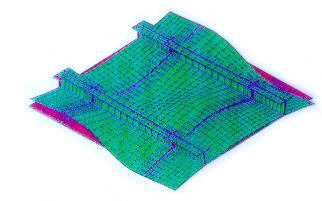
The development of methods for the Prediction and Management of Steel Plate Distortions, is a two year project , and is part of The Shipbuilders and Shiprepairers Association ( SSA ) Link Programme towards Integrated Technology for Marine Construction ( ITMC ) in the 21st Century.

This LINK programme aims to bring technology and working practices in the UK shipbuilding, ship repair and conversion industry up to and beyond world best standards and put in place the science needed for these sectors to achieve the technological improvements necessary to meet the challenges the industry will face if it is to prosper against European and Global competition.
|
Last Updated : 21/02/03 |
|
|
|
|
