
Participants
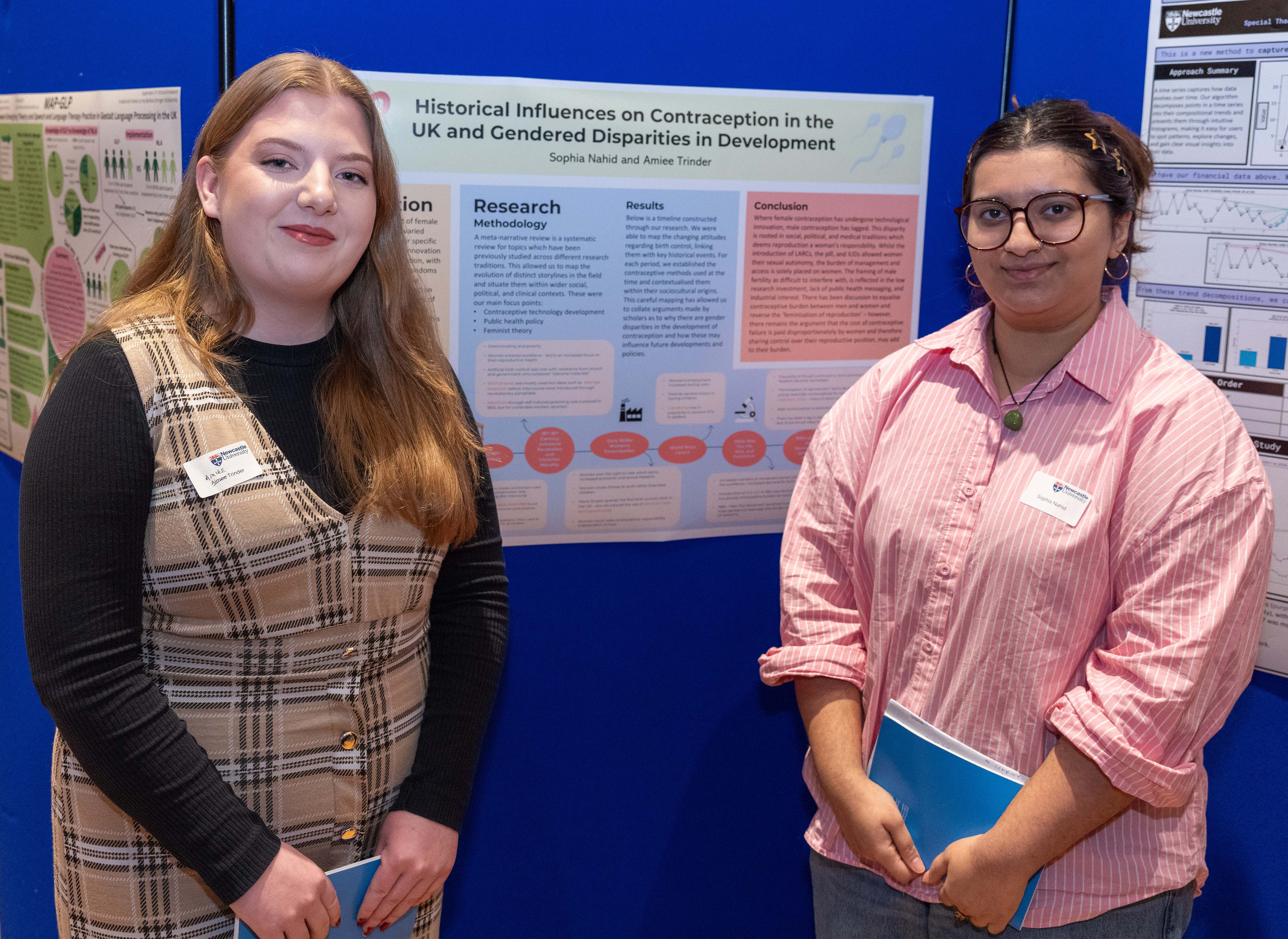 Sophia Nahid and Amiee Trinder
- Historical Influences on Contraception in the UK and Gendered Disparities in Development
- MBBS and BA Hons History
Using a meta-narrative review approach, this project aims to situate the history of contraception, both male and female, within social and political climates as well as within feminist theory. Combining the interdisciplinary perspectives of Medicine and History allows for a layered and comprehensive narrative of the political and social journey contraceptive health has taken.
Birth control methods for women take many forms such as the combined oral contraceptive pill and other long-acting reversible contraceptives; These methods are commonly used in the UK even though they may result in an increased health risk and negative side effects. In contrast, male contraception is largely limited to vasectomies and condoms. The development of birth control has provided women with sexual and economic liberation, but this combined with a lack of innovation in male contraception has resulted in a disproportionate burden of reproductive responsibility. Therefore, identifying relevant socioeconomic and medical factors for this lag and the medicalisation of women, allows for constructive change. Ultimately, development of male contraception relies on scientific, industrial and public interest to equalise the contraceptive burden. However, as the consequences of contraceptive failure still disproportionately affect women, progression in societal attitudes is also needed.