
Participants
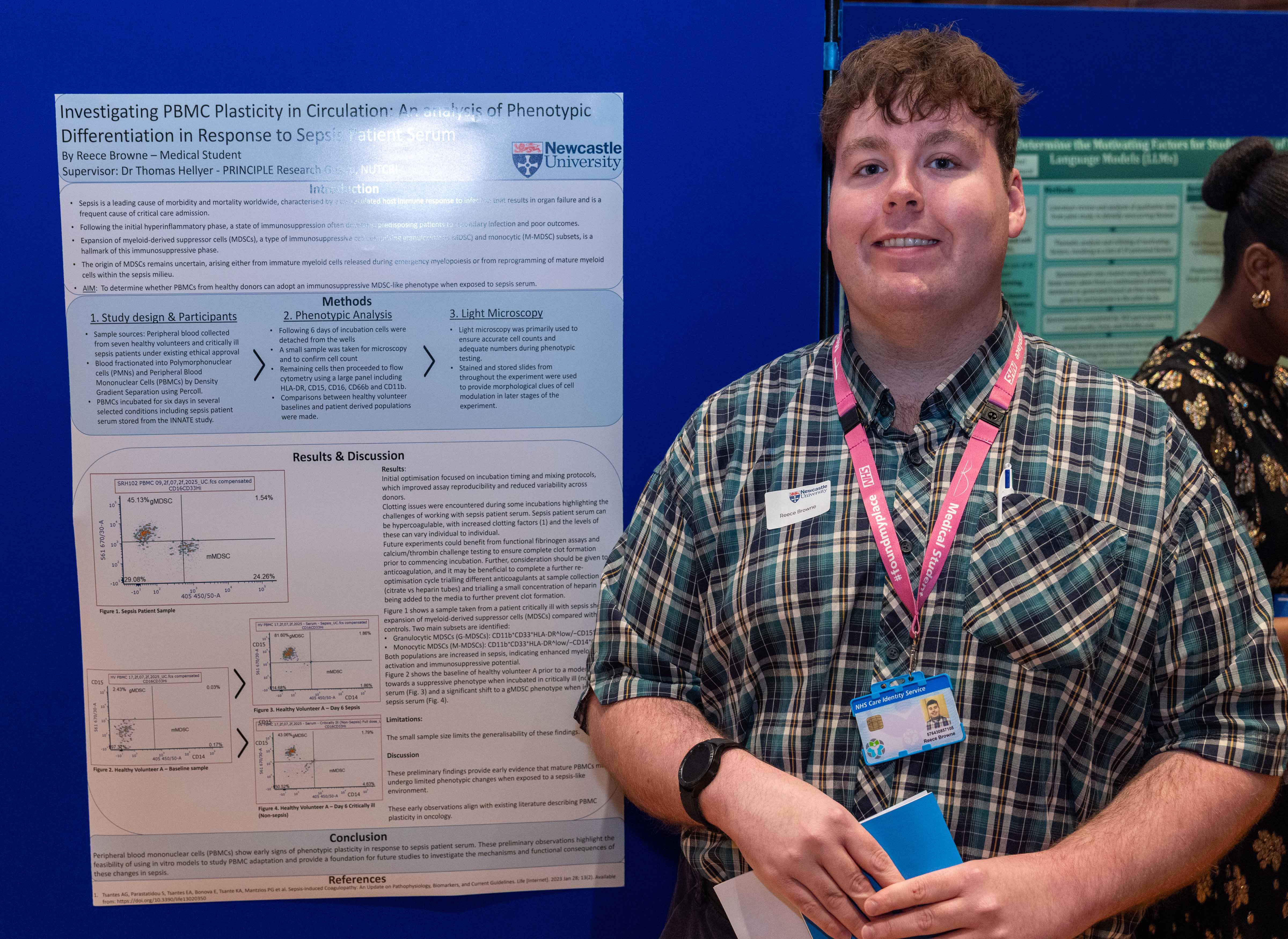 Reece Browne
- Investigating Neutrophil Plasticity in Circulation: An analysis of Phenotypic Differentiation in Response to Sepsis Patient Serum
- MBBS
Sepsis is a life-threatening condition in which the immune system initially overreacts to infection before becoming suppressed. Immune cells called myeloid-derived suppressor cells (MDSCs) are thought to play a role in this suppressed state, but it is unclear how they arise. In this study, we tested whether a group of
mature immune cells called mononuclear cells could change into MDSC-like cells. Blood from seven healthy volunteers was taken, the mononuclear cells were extracted and these were grown in a variety of conditions to simulate sepsis. After six days, we analysed proteins on the cells, comparing them with cells taken from critically ill sepsis patients. While the small number of samples meant that firm conclusions could not be drawn, early results suggest circulating immune cells can adapt in response to sepsis. These preliminary findings support the need for larger studies to determine whether such changes could help guide diagnosis or treatment.