
Participants
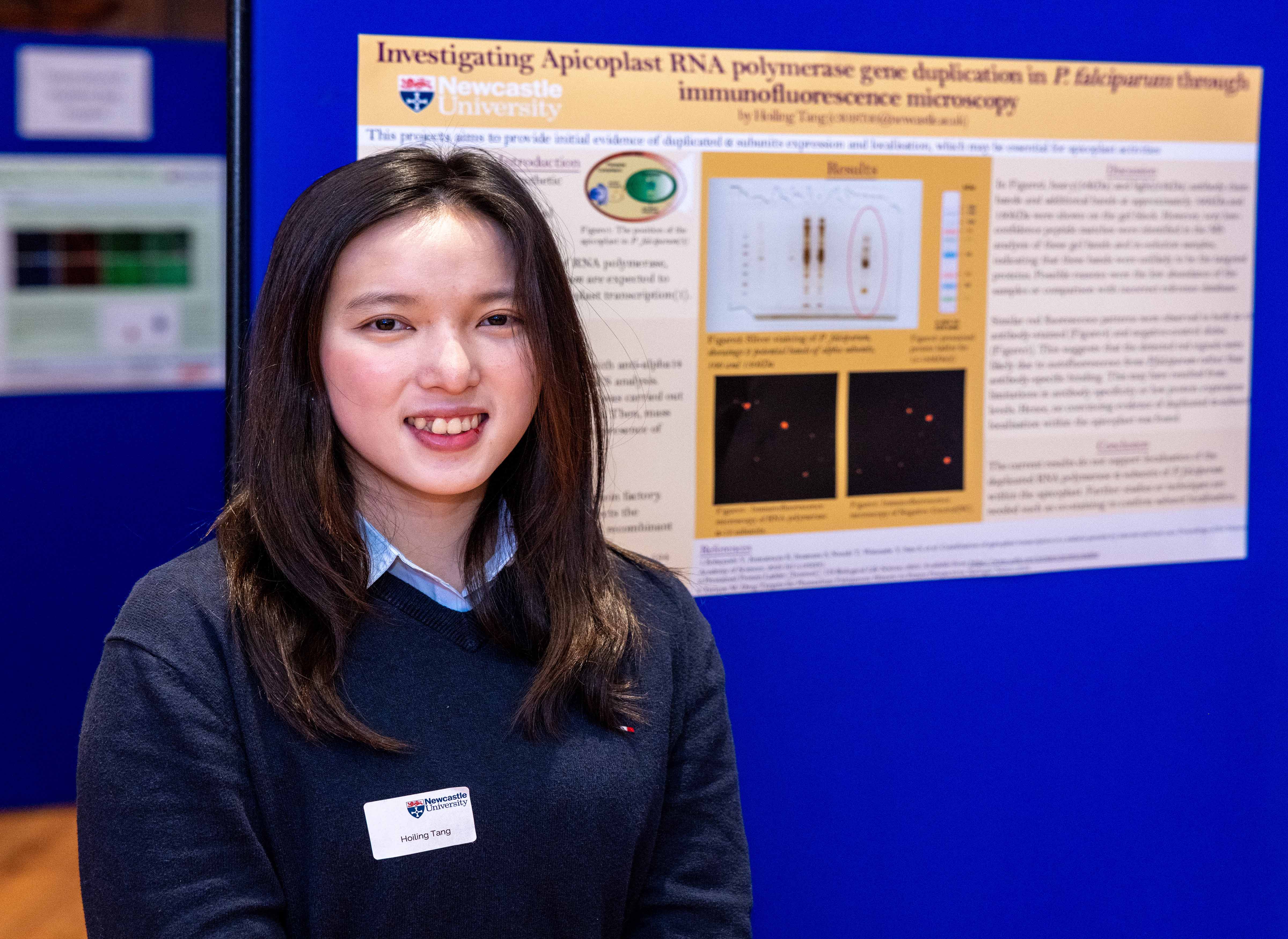 Hoiling Tang
- Investigating the significance of apicoplast RNA polymerase gene duplications in Malaria through immunofluorescence microscopy
- BSc Hons Biomedical Sciences
Malaria is a serious parasitic infection mainly caused by Plasmodium falciparum. The growing challenges of drug resistance highlight the urgent need to identify new therapeutic targets beyond those used in current treatments. One promising area is the apicoplast, a specific organelle present in P. falciparum but absent in humans, making it an attractive drug target. The apicoplast carries its own genes, including duplicated RNA polymerase alpha subunits, which are thought to play an essential role in parasite survival.
This project aimed to provide initial insights into the localisation of the duplicated alpha subunits. Both immunofluorescence microscopy and SDS-PAGE analysis were performed. Although the SDS-PAGE analysis was not as expected, immunofluorescence microscopy revealed weak signals in the samples compared with the negative controls. These findings suggest possible localisation of the duplicated alpha subunits in the apicoplast, supporting their potential as valuable targets for future drug development.