
Participants
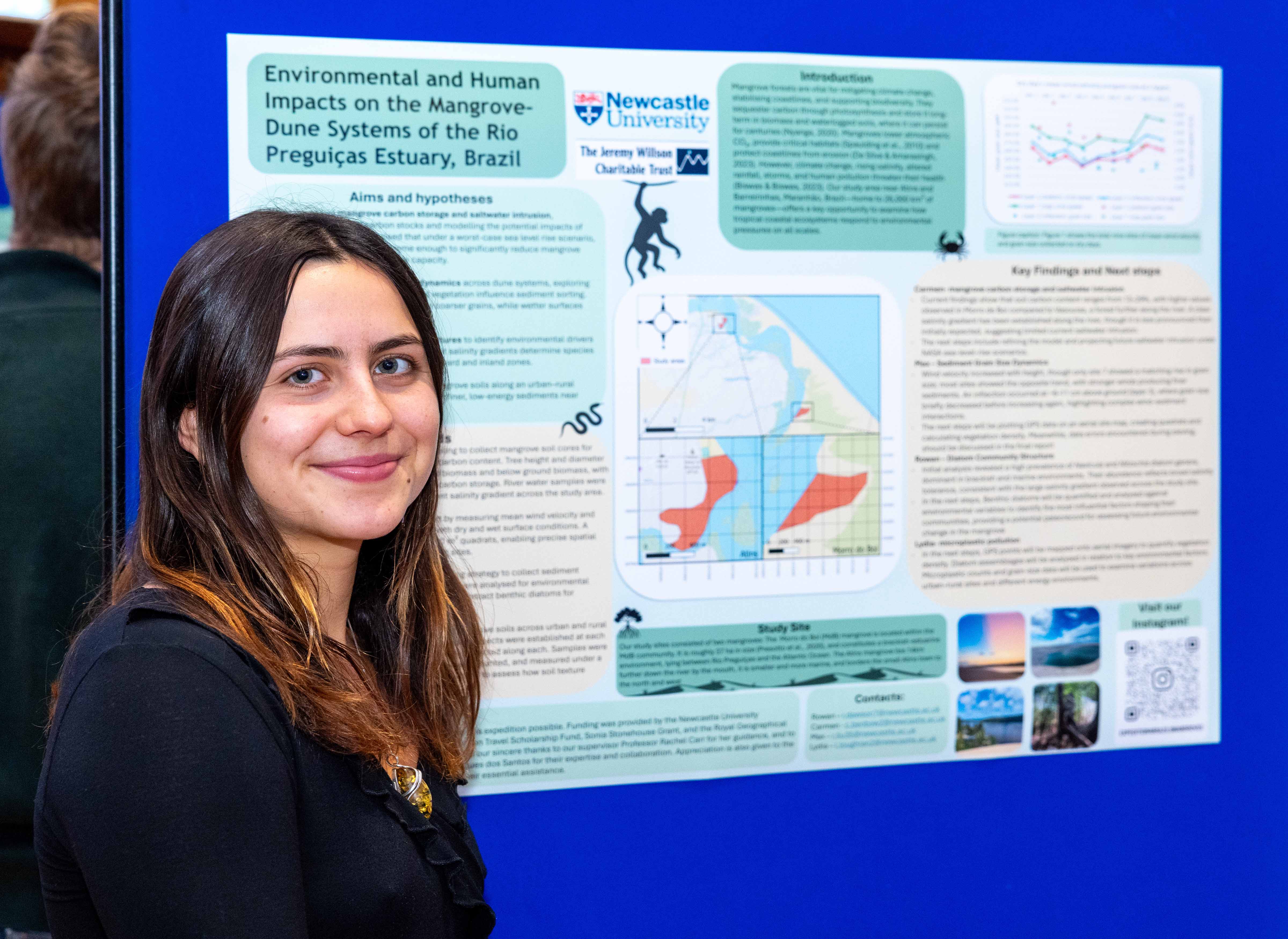 Carmen Benbow, Max Liu, Rowan Dawson and Lydia Loughran
- Investigating the environmental and anthropogenic interactions in the mangrove and dune systems of the Preguiça’s River estuary
- BSc Hons Physical Geography and BSc Hons Geography
This summer we travelled to Maranhão in northeast Brazil to carry out fieldwork in the mangrove forests and surrounding dune systems of the Preguiças estuary near Atins.
This region hosts some of the largest mangrove forests in the world, making it vital to study the environmental and anthropogenic pressures they face. Our expedition investigated these ecosystems from complementary angles to build a broader understanding of how natural processes and human impacts interact.
In the dunes, we measured sediment transport using traps, anemometers, and moisture probes to link wind speed and soil wetness to grain size movement. This data will show how dune dynamics influence the stability of adjacent mangrove ecosystems.
Within the mangroves, we examined soil samples for microplastic content to assess how human activity contributes to plastic accumulation and dispersal through estuarine processes. Alongside this, we investigated diatoms within mangrove soils as bioindicators of microhabitat conditions. This provides a way to reconstruct community structure and predict ecological shifts under climate change.
We also quantified mangrove carbon storage by measuring above ground biomass through allometric equations and by analysing the carbon content soil cores in the laboratory. This quantity of carbon storage allows us to consider the consequences of mass mangrove degradation from threats such as dune encroachment, saltwater intrusion and increasing tourism.
Together, these strands of research highlight the complex pressures facing Maranhão’s mangroves from land, sea, and people. Our findings will contribute to understanding the resilience and vulnerability of one of the world’s most important estuarine ecosystems.